The Mad Monarchist: King Abdullah of Saudi Arabia 1924-2015

  • Subscribe to our RSS feed.
  • Twitter
  • StumbleUpon
  • Reddit
  • Facebook
  • Digg

Sunday, 18 May 2014

Royal News Roundup

Posted on 22:32 by vikash gupta
A rather routine week for the House of Windsor, my favorite story will come first because I’m the autocrat around here and I can: Prince William, Duke of Cambridge attended the rededication ceremony for HMS Alliance, the only surviving British submarine of the World War II era, at the Royal Navy Submarine Museum in Gosport. The Duke had a good look over the proud old Acheron-class boat, probably with some pride as he was the patron of the organization that restored it as it is today. The Duke is also the Commodore-in-Chief, Submarines which I am very upset that I didn’t know about until this story made the news. Though, for some reason, the media coverage seemed more concerned with the Duke taking the traditional tot of rum than with the magnificent old submarine on display. The Duke toured the boat, talked to some proud veterans of undersea service and received his Dolphins badge, the insignia of submariners (in both Britain and America actually). There was a humorous moment as well when the Duke said, “It’s great that younger generations can really see and feel what it is like to be a submariner. I wouldn’t let George in here. A nightmare George is - too many things for him to pull and hit”. My favorite story of the week, hands down. In other news, the Prince of Wales said he is set to attend the D-Day commemorations this summer, HM the Queen spent a day at the horse races (which I’m sure HM enjoyed thoroughly) and Princes William and Harry did battle on the polo field to benefit charity. And, last but not least, the grand, old Duke of Edinburgh appeared at the Royal Windsor Horse Show, even driving a carriage (he used to race them) and not appearing in the least to be 92 years old.

On the continent, King Harald V of Norway served up some herbs grown on his own farm, Princess Martha Louise said she will miss be able to live life anonymously after moving back home from London and Princess Ingrid Alexandra (age 10) made her debut at parliament as part of the constitutional celebrations on Thursday. The Swedish Royal Family had a busy week of presenting awards, making visits and so on. Crown Princess Victoria spoke at the 7th Global Forum on Migration and Development. As for the Danes, Crown Prince Frederick and Crown Princess Mary had a busy week, visiting Poland, celebrating their wedding anniversary (congratulations there) and posing for a new portrait as well as taking in the Eurovision awards (but the less I say about that the better). In the Low Countries, Queen Maxima of the Netherlands attended the opening of a national campaign to collect instruments for music classes and dazzled onlookers in a ruby-tiara at the Annual Diplomatic Corps Gala Dinner on Wednesday. The Belgian Royal Family attended a 20 kilometer race and in Luxembourg news Prince Guillaume landed in America, visiting California and Utah. However, it was not all good news as Prince Jean (brother of Grand Duke Henri) felt obliged to hold a press conference to refute rumors that he was involved in a string of bombings in Luxembourg in the 1980’s, describing such rumors as absurd and hurtful. Also this week the new film about Princess Grace of Monaco was first seen and the Princely Family is now not alone in denouncing it as the film critics have panned it as an atrocious movie, aside from the inaccuracy of it.

In non-Euro royal news, King Abdullah II of Jordan was in London for the 90th annual Combined Cavalry Old Comrades Association Parade in London on Sunday, in his role as Colonel-in-Chief of the Light Dragoons. He was not the only Middle East monarch in town last week. The King of Bahrain also came to the UK for a visit, sparking some controversy over relations between the two countries, not because of anything the King did but because the chattering classes have taken issue with his rule of his country and accusations of suppressing democracy. This mostly involves the activities of the so-called “Arab Spring” which King Hamad of Bahrain took zealous action to oppose, supported by Saudi Arabia and to a lesser extent the US and UK. One wonders if these people would consider the case of Egypt something better? Charges have also been brought against the King and his son Prince Nasser in the UK by a Bahraini citizen based on allegations of torture. The legal immunity of Prince Nasser is currently under judicial review in the UK. Also, the Emir of Qatar is in preparations to transform the uninhabited Greek island of Oxia in the Ionian Sea into a massive luxury resort. Under current circumstances, it is hard to imagine any Greeks being able to afford to go there. However, they may perhaps have an African visitor as the controversial King Mswati III of Swaziland recently had his annual household budget increased by 10% to $61 million which is itself being criticized due to the poverty of most people in Swaziland and because such increases are not debated in parliament, Swaziland being an absolute monarchy where such debates would be seen as a challenge to the King.

In East Asia this week, Their Majesties the Emperor and Empress of Japan met with Prime Minister Benjamin Netanyahu of Israel and his wife on Tuesday. The PM also met with the Foreign and Defense Ministers and made remarks highlighting the similar difficulties faced by Israel and Japan because of ‘rogue’ regimes, comparing the threat Japan faces from North Korea to the Iranian threat to Israel.
Read More
Posted in news | No comments

Saturday, 17 May 2014

Today in French Royal History

Posted on 23:53 by vikash gupta
On this day in 1804 Napoleon Bonaparte was declared "Emperor of the French" by the French Senate. Later, Pope Pius VII would preside at his formal coronation. This was not supposed to be seen as a restoration of monarchy in France but an imperial elevation for the French Republic, similar to the way the Roman Republic carried on after Augustus became Emperor. However, it certainly was a monarchy, just not the traditional monarchy of France. The fact is that Napoleon had monarchical aspirations for some time. It was offensive to him that anyone should dare to consider themselves more lofty than he and he considered the Austrian Hapsburgs the most offensive. It helped that the Archduke of Austria was also the Holy Roman Emperor and traditionally there had only been one Emperor in western Europe and Kaiser Franz II knew that Napoleon had his eye on the job. So, in order to deprive the 'Corsican upstart' of his prize, Franz II abdicated and dissolved the (by then nominal) Holy Roman Empire and became Emperor Franz I of Austria. So, there were two emperors in the west and one in the east (the Tsar of all the Russias, but Napoleon was coming to him as well) and Napoleon began to revive monarchy where French forces had once torn it down, farming out his relatives to create new royal houses. However, it did not work as republicans found it repugnant and monarchists believed in sticking with the legitimate dynasties. Napoleon was the first to try to combine the ideals of the French Revolution with the structure of a monarchy but he would not be the last to prove unsuccessful at it.
Read More
Posted in France, History, Napoleon | No comments

Friday, 16 May 2014

Today in Nordic Royal History

Posted on 22:06 by vikash gupta
On this day in 1814 the Kingdom of Norway adopted a constitution and elected Danish Crown Prince Christian Frederick to be the King of Norway. This did not sit well with the neighboring Kingdom of Sweden which had lost Finland to Russia and was promised Norway in compensation, also something favored by the Allies who wanted to punish Denmark for a past alliance with Napoleonic France by separating Denmark and Norway. So, the Swedes attacked (led by a former Napoleonic marshal) and the Norwegians were defeated, securing the union with Sweden that lasted until the 20th Century. Prince Christian Frederick was not King of Norway for long but he was able to go on to become King Christian VIII of Denmark.
Read More
Posted in History, Norway, scandinavia | No comments

Thursday, 15 May 2014

Royal Profile: Raja Mahendra Pratap Singh

Posted on 22:06 by vikash gupta
Mahendra Pratap is a famous name in India and a man of very royal roots and connections. However, his path in life was not a royalist one. He devoted himself to the cause of Indian independence but at the same time, to create a very new sort of India, influenced by western political ideas (and often not the best of those) rather than a restoration of traditional Indian glory. He was born on December 1, 1886 in the Aligarh District of the United Provinces of Agra and Oudh, the third son of Raja Ghanshiam Singh Bahadur of Mursan in the Hathras District of Uttar Pradesh. The Mughal emperors had bestowed on the head of the family the title of Raja Bahadur and the ancestral state of Mahendra Pratap resisted fiercely when the British arrived and began expanding their influence in India. Eventually, they were defeated by the British and pro-British forces so that the family was left with a reduced number of villages and no political power. With such a background, it is little wonder that Mahendra Pratap would ultimately devote his life to ending British rule in India. When he was only three years old he was adopted by another princely family that had fought against the British, unsuccessfully, and had been dispossessed by 1818. This was the family of Raja Harnarain singh Sahib of Hathras.

The grandfather of Raja Harnairain, Raja Dayaram, had resisted the British and been forced to flee to central India but his son restored the family fortune by siding with the British during the Sepoy Mutiny of 1857 in return for which his title was restored to him and he was given control of a number of districts but died soon after. Hathras was not one of the areas restored to his control and so many locals attributed his death to a broken heart. Young Mahendra Pratap grew up with this family in the Vrindavan Palace and had a very happy childhood, living in splendor and surrounded by a loving family. He was given a good education but even in his youth displayed a distinct lack of interest in his royal status, a concern for the common people and a burning desire to drive the British out of India. While in college in 1902 he married the daughter of a Jat Sikh family from the Jind princely state of Haryana in what was then Punjab named Maharani Balbir Kaur. She died in 1925 but in his later career, Mahendra Pratap would make much of the religious diversity of his family connections, Hindu, Muslim, Sikh and portray himself as a representative of the vast diversity of India. And that was something he knew very well as he, along with his brother, traveled extensively until he had visited practically every corner of the immense Empire of India.

It is worth noting that, in his travels, he seemed to interpret everything he saw according to the radical ideologies he had picked up in college and was becoming rather Marxist in his worldview. When he traveled around India, he seemed to only see the negative, the poor, the victimized and little else save for the variety of peoples and beliefs that might pose a problem in his dream of uniting all Indians in opposition to British rule and the whole of traditional Indian society as it had been. Still, he went home to his own palace and was not above using his princely connections to further his own cause. He was able to meet with other pro-independence notables, promote education and household industries to further the cause of economic independence. Eventually this led him to take the dramatic step of leading a campaign to burn all foreign-made clothes in his state. Frustrated by the relatively small impact he was having at home, in 1914 he decided to go abroad and to seek foreign assistance for removing the British from India. Obviously, it was an ideal time as August of 1914 saw the British Empire take on some powerful enemies.

Mahendra Pratap made it to Switzerland and it was there that his cause and that of the German Empire found each other, working through the man who would later be made famous by a telegram, Arthur Zimmermann in the German Foreign Office. Zimmermann, who would also promote the use of the communists to undermine the Russian Empire, was enthusiastic in supporting Indian revolutionaries to undermine the British Empire. Mahendra Pratap was just as eager but insisted on meeting Kaiser Wilhelm II himself, which he did. The Kaiser decorated him with the Prussian Order of the Red Eagle and discussed with Mahendra Pratap an idea the Germans had long pinned some hope on; an invasion of India through Afghanistan. Already allied with the Ottoman Empire of Turkey, it was hoped that Muslim solidarity with the Central Powers would be easy to achieve and that the appearance of even a modest force on the northern border would incite Indians of all backgrounds to rise up against the British Raj and few doubted that Great Britain would be crippled by the loss of India. It was not a new idea. Shortly before the war broke out, the Kaiser, in one of his troublesome marginal notes, wrote, “Our consuls in Turkey and India, agents, etc., must inflame the whole Mohammedan world to wild revolt against this hateful, lying, conscienceless people of hagglers; for if we are to be bled to death, at least England shall lose India.”

The prince was introduced to men in the German army and officials in Austria-Hungary. He met the Khedive of Egypt while in Vienna and later when on to the Ottoman Empire where he was also warmly received. A German-Turkish expedition set out across Persia to Afghanistan led by General Oskar Ritter von Niedermayer and the diplomat Werner Otto von Hentig. On December 1, 1915 Pratap set up a provisional government in Kabul, Afghanistan for “Free Hindustan” with himself serving as President and other prominent advocates of independence in lesser posts. The Muslims added their voice to that of the Ottoman Sultan by declaring a jihad against the British Empire of India but obtaining the support of the Emir of Afghanistan proved frustrating and ultimately impossible. He demanded much but refused to commit himself and, unaware that the British were already giving him more than the Germans ever would to stay on side, the effort was finally abandoned in disgust. There would be no Muslim army to attack northern India and there would be no mass Indian uprising against the British in World War I. The would-be president was left without a job but he still had enough Marxist credentials to be invited to Russia after the Bolsheviks seized power by Vladimir Lenin.

The provisional government in Kabul
Mahendra Pratap went to the emerging Soviet Union and Lenin rolled out the red carpet for him (so to speak). At that time, it was probably easy to be taken in by Lenin who had yet to actually do very much but was full of utopian promises about what the future of the Soviet Union would look like and what a Marxist vision of socialist paradise it would become. Pratap did not stay long enough to see the nightmare the USSR would grow into as things were far from stable and the British were beginning to make a serious effort to apprehend the troublesome prince. When World War I came to an end with the Allies victorious and the British Empire enlarged, he found himself effectively back where he had started with his former powerful friends in Berlin, Vienna and Constantinople all gone. Returning to India seemed out of the question so, in 1925, he traveled to the Empire of Japan which had long been a haven for Asians who dreamed of independence from European colonial rule. His vision for a free India, it must be remembered, was a totally alien and revolutionary one. Aside from his Central Powers backers, the only Allied countries to look with any favor on his “Free India” attempted government were the United States and Russia and despite his pedigree, it infuriated him that the monarchs of India had opposed his anti-British scheme for armed rebellion.

In fact, his tendency toward collectivism seemed to grow ever stronger and he even tried to set up his own brand of religion which was to be a sort of combination of all beliefs with the only dogmas being that all religions be accepted, all faiths, all races and all classes be united with no discrimination and all treated equally. He even dreamed of such collectivism on a global scale by doing away with the unequal institutions of the past and creating a sort of world federation where all humanity would be united and everyone would be the same. He set up a “World Federation Centre” to promote such ideas but had been largely sidelined by the time of World War II. Although still in Japan, it was another revolutionary, Subhas Chandra Bose, and another provisional government of Free India that would gain support from the Axis powers in another effort to provoke an Indian rebellion against Britain. Another socialist, though a more authoritarian one, Bose would be no more successful than his predecessor though he did at least manage to get some Indian rebel troops onto Indian soil for a clash with the British but it was swiftly turned back.

In 1946 Mahendra Pratap was finally allowed to return to India where the first thing he did was rush to meet the rising star of Mahatma Gandhi. The following year, Great Britain granted India independence and Mahendra Pratap spent the rest of his days continuing to push his political agenda, basically railing against the elites (of which he himself was a member, in both the old and new versions of India), being elected to office, presiding over Jat gatherings and advocating for greater power for local assemblies. It was not exactly the fate he had hoped for when he stood as provisional President of Free India but, despite his defeats in working with foreign powers in an attempt to overthrow British rule, there is no doubt that the India created after independence has more in common with his vision than that of the traditional India that existed before the arrival of the British (or any other Europeans) and which had endured throughout the Raj. Whether it is better or not would depend on the view one has of Indian history and the heights achieved in those days the current republic has separated itself from. Raja Mahendra Pratap Singh died on April 29, 1979.
Read More
Posted in India, royal, Word War I | No comments

Wednesday, 14 May 2014

Royal Friends of Texas: Spain

Posted on 22:14 by vikash gupta
Of all the monarchies in the world, none has deeper ties with the state of Texas than the “Land of the Setting Sun”, the Kingdom of Spain. Texas was, at least nominally, under the Spanish Crown for about 302 years which, of course, is far longer than the roughly 159 years that Texas has been part of the United States of America. Given that, it is no surprise that the cultural impact of Spain on Texas has been immense and the relationship between Texas and Spain has been a long one. It all goes back to the reign of King Carlos I of Spain (Emperor Charles V to most people) in whose name Texas was first claimed by the Spanish explorer Alonso Alvarez de Pineda. In 1528 another Spanish explorer, Alvar Nunez Cabeza de Vaca, became the first Christian to set foot in Texas when he was shipwrecked on the coast. The first major exploration of the interior of Texas was carried out in the reign of King Felipe II by Francisco Coronado who also described a group of natives from whom the area of Texas derived its name (which means “friend”, hence Texas being known as “the friendship state”). However, Spain made little effort to make much of Texas until the French started to take an interest in the region.

When the French explorer La Salle mistakenly landed at Matagorda Bay, he claimed the region for King Louis XIV and established a fort in the area named for St Louis. The French effort did not succeed in establishing a permanent foothold as there was a mutiny and La Salle was killed. A Spanish punitive expedition found that the French had all killed each other or been killed or enslaved by the natives. The natives of the Texas coast were quite a fierce bunch and were the first to ever enjoy French cuisine in Texas -that being the French sailors themselves. Disaster though it was, this made it clear to Spain that Texas was vulnerable to attack and so a campaign began, at the behest of King Carlos II, to establish a string of missions and forts across Texas to guard the frontier with the French territory running down the Mississippi. This led to the first real Spanish presence in Texas and it produced the oldest historic buildings and settlements in Texas that survive to this day. The difference between the missions and the presidios (forts) can sometimes be hard to see since the missions were sometimes built like forts and every fort, of course, had a chapel. It is a mark of the appreciation for history and tradition in Texas that these missions are still standing and mass is still said in them on a regular basis.

The unfortunate King Carlos II was the last Hapsburg to reign over Texas and when the Crown of Spain passed to the Bourbon dynasty there was a marked shift toward greater centralization in government. Texas received a Royal Governor who established himself in San Antonio, the largest settlement at the time, and whose palace is the most lasting remnant of the era of monarchy in the Lone Star State. However, not many people in Mexico were anxious to move to Texas and settle. The relatively few settlers often came from Spain or some Spanish possessions closer to the homeland (such as the Canary Islands) and most of the settlements consisted of those farming Indians who had converted to Catholicism under the instruction of the Franciscan friars and the Spanish soldiers posted at the forts and missions to guard against a French attack and to protect the peaceful Indians from the hostile ones who survived by raiding as well as hunting. Eventually, after being held by Spain for a time, the Louisiana Territory was sold by France to the United States and the threat of a foreign incursion became an American rather than a French one.

Such fears were based in reality as, early on, there were attempts by filibusters (land pirates) from the United States to seize Texas from Spain. None of them succeeded but as revolution began to spread in Mexico, the forces of the Spanish Crown in Texas were suddenly faced by two enemies. In 1812 a Mexican republican made common cause with an ex-Army officer from the United States and invaded Texas with an army of Mexican revolutionaries, Indians, escaped slaves and assorted American criminals called the Republican Army of the North. They seized much of the province but were weakened by in-fighting and finally defeated and wiped out by a Spanish royalist army in 1813 at the battle of Medina, the largest battle ever fought on Texas soil. The reign of King Fernando VII was restored but only for the time being. Events in Spain brought together the left and right, at least temporarily, in Mexico and in 1821 what had been New Spain, including Texas, broke away as the Empire of Mexico under the former General Agustin de Iturbide.

The short-lived reign of Iturbide would be the last time Texas was under a monarch. It was also during the brief rule of the first Mexican Emperor that the first Anglo colonists began to settle in Texas. In fact, negotiations for the settlement were interrupted by the overthrow of Iturbide and had to be concluded with his republican successors. So, 1821 was the last year of unity between Texas and Spain and the unity between Texas and Mexico would be much more short-lived. The Kingdom of Spain never recognized the independence of the Republic of Texas, which is not surprising considering that Texas declared independence on March 2, 1836 and at that time Spain did not even recognize the independence of Mexico (that came later in December of that year). Nor was there much improvement in relations in the decades that followed due to American aggression against the remaining Spanish colonies in the Caribbean, ultimately resulting in the Spanish-American War. However, be it the Alamo, Goliad or San Jacinto, all of the most famous landmarks in Texas, all the places with the greatest historical significance, were part of the Spanish cultural legacy. Given the frequency of civil war in Spain itself, there was little opportunity for much business with Texas and when *the* Spanish Civil War broke out, opinion was divided in the United States as it was in the rest of the world. Most, like Mexico for that matter, favored the Spanish republicans but not quite everyone did as there were bitter condemnations against the Texas Oil Company (modern-day Texaco) for diverting shipping bound for the republican government to the nationalists instead.

During the Franco era the Texans saw Spain as a partner in the struggle against communism and the Generalissimo even marked Spanish-Texan ties by sending a statue of a conquistador to San Antonio where it still stands in front of the old Royal Governor’s Palace. Closer ties were forged after the passing of Franco and the restoration of the Spanish monarchy. King Juan Carlos has always made it a priority to try to encourage amity with the lands of the former Spanish Empire and Texas was not excluded. In 1987 King Juan Carlos and Queen Sophia became the first Spanish royals to visit Texas, receiving a warm welcome. “Spain is also very happy to have contributed in the passage to forge that identity as you today contribute to make this state one of the most prosperous, beautiful…in the United States,” the King said. Their Catholic Majesties received some cowboy hats, were greeted by crowds waving Spanish flags and musicians playing a combination of country-western and mariachi music. They visited the Alamo, took a floating tour of the San Antonio River and heard mass at the historic Spanish mission of San Jose (where the Cross of Burgundy still flies). In the years since, the King, Queen and other members of the Spanish Royal Family have visited the Lone Star State on numerous occasions.

Today Texas and Spain enjoy a close, friendly relationship, based more on culture and history than trade or commerce. Spanish people may not have a major presence in Texas, but the presence of the Spanish legacy is immense. The largest single religious denomination in Texas is the Roman Catholic Church, whose roots in Texas go all the way back to the original Spanish missionaries and the largest ethnic group in Texas is Hispanic with those of Spanish or at least partial Spanish ancestry recently becoming the majority of the population. By far, the most common language spoken in Texas, after English, is the Spanish language, even if it is more similar to that of colonial Mexico than pure, proper Castilian. Music, food and architecture across Texas have been heavily influenced by our Spanish roots and it is not enough to say that Texas and Spain are close, that they have been or will be but more than that, the fact is that Texas would not be Texas at all without the Kingdom of Spain.
Read More
Posted in Spain, texas, texas friends | No comments

Tuesday, 13 May 2014

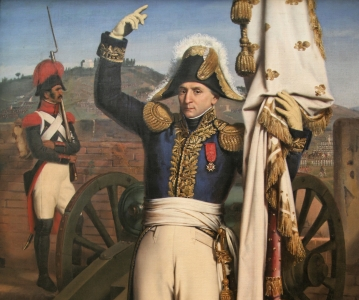
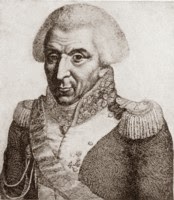
Monarchist Profile: Louis Francois Perrin de Precy

Posted on 22:11 by vikash gupta
Louis Francois Perrin, Count of Precy, was born in Anzy-le-Duc on January 14, 1742. He came from a family well connected with the French royal armed forces and it was no surprise when, as a young man, he decided on a military career. In 1755 he doubtless benefited by some family ties when he joined the Regiment of Picardy in which his uncle served as a battalion commander. He participated in the Seven Years War (French & Indian War in America) but did not have too much excitement, being mostly confined to garrison duty. In 1774 he was posted to the island of Corsica (which was still not exactly enthusiastic about French rule) and was promoted to captain. He had a distinguished military career, performing his duties well and in 1784 was awarded the Cross of St Louis and was later promoted to lieutenant colonel in the Regiment of Chasseurs (light infantry) des Vosges. Precy and his men were posted to Lyon from 1787 to 1789 and then to Collioure. For his continued meritorious service, in November of 1791, he was appointed to the King’s Foot Guards but that unit was disbanded the following year.

Siege of Lyon
The dissolution of the Guards was, of course, due to the rising tide of the French Revolution which was gaining strength after breaking out, more or less, with the storming of the Bastille on the fourteenth of July 1789. Precy, who was ever loyal to His Most Christian Majesty King Louis XVI, was not looked on kindly by the increasingly powerful revolutionary elite and on August 10, 1792 he retired from military service and withdrew to his estate of Marcigny. However, his service in Lyon was not forgotten in that important city, particularly by the loyal people there who were becoming increasingly alarmed by the radicalism of the French revolutionary government. Finally, the royalists of Lyon rose up in opposition to the convention (the revolutionary body ruling France) and sent emissaries to ask Precy to come and take command of the army defending Lyon. Willing to serve, Precy agreed and threw himself into the defense of Lyon with zeal, establishing fortified lines, strong points and organizing artillery support from Chenelette. He was not in an enviable position, with few resources and a population that was divided. The anti-revolutionary forces in Lyon included royalists as well as many Girondists who were republicans but who felt the revolution had gone too far (the massacre of the Girondists by the radical Jacobins marked the start of the Reign of Terror).

The army defending Lyon, however, was also largely moderate republicans but the officer corps was predominately royalist, including of course Precy and very aristocratic. They were united only by their common opposition to the radical regime in Paris. The convention took action, diverting the Army of the Alps from its invasion of Savoy and on August 9, 1793 the siege of Lyon began. The Count of Precy was outnumbered roughly three-to-one but he put up a stiff resistance in spite of the heavy bombardment from the revolutionary forces. However, the overwhelming strength of the enemy took its toll and despite repeated counter-attacks by the cavalry (until there were none left) every time they advanced, the situation seemed hopeless as the protecting forts fell one by one. Eventually, the political divisions inside the city began to take their toll and civic leaders proposed making a negotiated peace. Precy, certainly speaking for his fellow royalists, opposed this and wished to carry on the fight. Given what had already happened in France, no one could realistically hope to survive a capitulation to the revolutionaries. Nonetheless, the decision was made to surrender and a truce was declared on October 7 for negotiations to begin.

Knowing what the revolutionaries thought of honoring agreements and what they considered “justice”, Precy would have no part in the proceedings. He gathered together the like-minded survivors of his army, about 1,000 infantry and 200 cavalry and on the morning of October 9 managed to break out of Lyon and escape. However, they were attacked every step of the way by the revolutionary forces as they pushed through St-Cyr-au-Mont-d’Or, Poleymieux, les Cheres, Alix, Theize, Oingt and to St Romain de Popey. Sadly, by that point, almost the entire force had been wiped out but Precy survived, protected by his loyal men, the few that survived and he was hidden in Ste Agathe-en-Donzy for 15 months before escaping across the border to Switzerland disguised as a jockey.

In 1795 the count made his way to Turin in the Kingdom of Piedmont-Sardinia and two years later married the widow of a cousin of his who had died at the guillotine in Lyon named Jeanne-Marie de Chavannes. From Turin he eventually moved to Vienna and lived there in Austria until 1811 when he was finally able to come home to his beloved France. Precy took up residence in Dijon and after the restoration of the monarchy, the devoted old royalist was able to have his moment of glory when, in August of 1814, he returned to Lyon as commander of the National Guard there. Of course, it was not quite over yet and when Napoleon returned during the “Hundred Days” the count was placed under house arrest. However, once that episode was passed, he returned to his duty, faithfully serving his King and France until his retirement. He died on August 25, 1820 and the following year his remains were moved to a special memorial in Lyon.
Read More
Posted in France, French Revolution, Monarchist | No comments

Monday, 12 May 2014

The Situation in Nigeria

Posted on 22:05 by vikash gupta
Right now, despite terrible things happening all over the planet, the attention of much of the world is focused on Nigeria and the roughly 300 girls who have been kidnapped by a radical Islamic fundamentalist group opposed to “western education” (read: education). They have threatened to sell the girls into slavery (so the slave trade still seems to be going on) and have already claimed to have converted the girls to Islam (the kidnap victims being predominately Christian). Recently the Nigerian president asked President Obama of the United States for help and the governments of America, Britain, France and China have all said to be sending some form of assistance to help get these girls back. This experience has raised many questions though. How could Nigeria have allowed this to happen in the first place? How is it that a terrorist group could act with such impunity without the government and Nigerian military being able to stop them? The usual answer given is a combination of poverty, corruption and incompetence. Yet, how can this be? Nigeria has the largest population and the largest economy in the whole of Africa. In the old days of the British Empire it was considered the African country most prepared to assume full independence. Was ‘most prepared’ perhaps not sufficiently prepared?

From around 1800 the British began to take an interest in the region, particularly after the abolition of the slave trade and the stationing of a Royal Navy squadron in the area to interdict slave trafficking. In 1886 the Royal Niger Company was established, spreading its influence in the region and when the local kingdoms fought back there were a number of small colonial wars in which British troops were successful in suppressing opposition and establishing a northern and southern pair of protectorates over the region. With the establishment of a German colony in Cameroon there were increased concerns about security and the two halves were united in 1914 as the Colony and Protectorate of Nigeria. The coastal areas of the south, where the British presence was most concentrated, progressed rapidly, spreading education and higher standards of living while the more isolated north lagged behind. In fact, slavery was not wiped out in the north until 1936 but as the British presence expanded it was wiped out as it was something that would not be tolerated. Especially around the time of World War II, Nigeria grew increasingly prosperous and was considered one of the best success stories for the British Empire. Soon, Nigeria was on the fast-track to independence and in 1954 the Federation of Nigeria gained total autonomy as a Commonwealth Realm and adopted its current flag.

It might have been better if things had stopped right there but, in the wake of World War II, nationalist and anti-colonial sentiment was on the rise all across Africa and soon the demands for total independence and a complete break with Britain were growing. After a change in government, Britain also gave up on any idea of trying to retain colonies or former colonies to create the “Third British Empire” in Africa that Anthony Eden had envisioned. In 1960 Nigeria declared complete independence and became a republic. Unfortunately, things went ‘downhill’ from there. Election results were never widely accepted, accusations of corruption became commonplace and soon the standard method of changing the government was by one coup after another, starting with an attempt by radical leftists to seize power (the usual suspects). Left fought right, north fought south and from 1967 to 1970 civil war raged across Nigeria. The infrastructure built up in the colonial era was all but wiped out, disease returned, starvation set in and these, combined with the fighting and occasional atrocities resulted in millions of Nigerians being killed.

During all this time, and still today, the royals of the old native kingdoms carried on, as best they could, throughout the changing conditions. Some, like Sir Adetokunbo Ademola, who was Chief Justice of the Nigerian Supreme Court and son of King Ladapo Ademola II of the Alake and Egba clans, worked for the government. Some were themselves a focus for violence like Sir Olateru Olagbegi II, King of Owo, who was deposed and when the civil war broke out, his supporters took the opportunity to strike back at his enemies. King Akenzua II of Benin tried to promote peace and reconciliation but most traditional monarchs were pushed aside. Their status has only ever been recognized in an honorary sort of way and they have been forced to either take part in the political struggle or remove themselves completely and focus on religious and cultural affairs for their particular people. For Nigeria as a whole, even when the civil war ended, conditions did not drastically improve as the country came under the rule of a succession of military dictators. This situation persisted until 1999 when democracy was restored along with the previous complaints of fraud and corruption with every election.

It is true that Nigeria has seen immense wealth burst up from the country, not only because of the large market of the country but also with the discovery and exploitation of oil on the Nigerian coast and other valuable resources. However, rather than an orderly marketplace and increased prosperity for the country, this had led to a wealthier government but poorer people and increased violence as factions fight over the profits from oil revenues. Elections continue to be condemned, not only by the losing parties but by international observers as well as being corrupt and unfair. In short, as is seen in so many failed states around the world, Nigeria has all the ingredients to make for a very successful country but is squandering those resources thanks to corrupt and dishonest politicians who care more about themselves than the national wellbeing. Now we have reached the point where 300 young girls can be snatched from their schools, sold into what amounts to sexual slavery and the government is impotent to do anything about it. Moreover, the fact that political leaders put their own pride and public image before the general welfare is proven by the fact that immediately after this happened the United Kingdom offered help to the Nigerian government but was refused.

Why would British assistance be refused when only a short time later the President was practically begging for any help from a number of foreign countries? Who can say what is going on in his mind, but I would assume it would involve the appearance of having to accept help from the first country of the former British Empire. However, the fact remains that if one is obliged to call in foreign countries to assist in what amounts to maintaining law and order in your own country, then no matter what the law or international community says, you are not really independent at all. Why keep up the pretense? Naturally, I think restoring Nigeria as a monarchy would be of help but, as I have said before, monarchy is not a cure-all and it would all depend on how it was done. As far as placing a native monarch on the Nigerian throne, that would be a difficult proposition. No one monarch represents the whole of the people and it could lead to more civil strife rather than less. That being said, I will not hear any complaints about the map of Africa being drawn arbitrarily by European colonizers. The independent African countries of today could redraw the map if they wish but I don’t think anyone wants to see the break-up of their country, so that is simply a distraction. So, what about restoring the Queen to the throne as in becoming a Commonwealth Realm again?

Nigeria becoming a Commonwealth Realm with Queen Elizabeth II as sovereign would, of course, be controversial. It could be done but even I don’t think it would necessarily make things better. It certainly could but only if it was done in a much more ‘old fashioned’ way than most would find palatable. First of all, no country likes even the idea or image of being ruled by someone else, that is natural and understandable. My ideal for colonial empires is helping along less developed countries to fully developed status to become self-governing members of a wider family of nations with things in common. By going back to an older style of government, I do not mean that Britain should be put in charge of governing Nigeria. That would never be tolerated and it would not even be good for Nigeria. Things might be run better and it might stop hundreds of girls being kidnapped but it would not improve the quality of the Nigerian ruling class and, frankly, I have not been impressed lately by the ability of the British to govern themselves much less others. However, how I think a Commonwealth Realm for Nigeria could be beneficial is to have some viceroyal oversight for the country. That means a Governor-General who is not just appointed on the advice of the Prime Minister, that would be useless. It means having a Governor-General, possibly a royal (British or perhaps even Nigerian) who is impartial and can ensure that things are being run correctly. It does not mean a royal-appointee having power over everyone, but simply have someone there who is not elected, cannot be influenced, who can keep an eye on things to make sure that those who do hold power are following the rules and raise the alarm when they do not.

That, I think, would be the best solution possible that could happen, though of course the odds of such an idea gaining sufficient support would be infinitesimally small. Pride and past grudges should be set aside though. Things have obviously not worked out well for the government of Nigeria or things like these massive kidnappings would not be going on. With a large market, a willing population and natural resources there is no reason for Nigeria to still contain so much poverty or to be incapable of maintaining law and order and keeping its people safe. Something needs to change. Foreign assistance may enable these poor girls to be rescued, but the American Secret Service cannot be the answer to every problem and they cannot solve the fundamental problems that afflict Nigeria. It is time to learn from the past, be frank about past mistakes that have been made, set aside the personal pride of politicians and do what is in the best interests of the country.
Read More
Posted in Africa, nigeria, opinion | No comments
Newer Posts Older Posts Home
Subscribe to: Posts (Atom)

Popular Posts

  • Royal News Special Report: Betrayal in Britain, On the Run in Ulster
    The history of British-Irish relations has often been unpleasant and controversial. Irish independence was a struggle, the establishment of ...
  • The Knights Templar
    When it comes to knighthood, probably none are so iconic as the Knights Templar. Officially the Poor Fellow-Soldiers of Christ and of the Te...
  • Today in French Royal History
    On this day in 1804 Napoleon Bonaparte was declared "Emperor of the French" by the French Senate. Later, Pope Pius VII would presi...
  • Consort Profile: Empress Kojun of Japan
    There are certain monarchs that have always impressed me as being ‘a monarchists’ monarch’. Putting aside their positive or negative abiliti...
  • The Tragedy of the Second Spanish Republic
    As constant civil wars and political infighting over a disputed succession had crippled the Kingdom of Spain, in 1870 the Spanish government...
  • Monarch Profile: King Luis I of Portugal
    HRH Prince Luis Filipe Maria Fernando Pedro de Alcantara Antonio Miguel Rafael Gabriel Gonzaga Xavier Francisco de Assis Joao Augusto Julio ...
  • MM Movie Review: Juana la Loca
    “Juana la Loca” or “Mad Love” as it was released in the United States is a 2001 historical drama and partial biopic of Queen Juana of Castil...
  • The Bonaparte Crusader
    Few people, even, or perhaps especially, monarchists would think of a Bonaparte as a religious crusader. Napoleon Bonaparte supported the vi...
  • Monarch (sort of) Profile: Nguyen Duc Duc
    This profile was a rather difficult one to decide to do for the simple reason that the monarch known as Duc Duc was hardly a monarch at all....
  • The Belgian Army in World War I
    Among the countries involved in the outbreak of the First World War, each must bear some measure of blame for the disaster. That is, all but...

Categories

  • 2013
  • 2014
  • abdication
  • abortion
  • ad
  • afghanistan
  • Africa
  • aga khan
  • Akihito
  • america
  • anniversary
  • argentina
  • armenia
  • Australia
  • Austria
  • Austria-Hungary
  • Baden
  • Bavaria
  • Belgium
  • Bhutan
  • birth
  • Birthday
  • blog
  • blog policy
  • bonaparte
  • bosnia
  • Bourbon
  • Brazil
  • British Empire
  • brunei
  • bulgaria
  • bullfighting
  • burma
  • cambridge
  • Canada
  • cardinal
  • caribbean
  • Carlism
  • Carlists
  • castile
  • Catholic
  • Catholic Church
  • Charles I
  • children
  • China
  • Christ the King
  • christianity
  • christmas
  • clash
  • colony
  • communism
  • Congo
  • consort
  • coronation
  • croatia
  • crusades
  • czech
  • czechoslovakia
  • death
  • democracy
  • Denmark
  • dominican republic
  • Easter
  • Economic crisis
  • egypt
  • Elizabeth II
  • Emperor
  • emperor of austria
  • emperor of vietnam
  • empire series
  • England
  • eternal rest
  • Ethiopia
  • fascism
  • fashion
  • favorites
  • film
  • Finland
  • flag
  • France
  • French Revolution
  • gay marriage
  • Germany
  • golden horde
  • government
  • Grace Kelly
  • Great Britain
  • Greece
  • Grimaldi
  • guadeloupe
  • guest
  • halloween
  • Hanover
  • Hapsburg
  • Harald V
  • Hesse
  • History
  • hohenzollern
  • holiday
  • Holland
  • Holy Roman Empire
  • Hungary
  • images
  • immigration
  • incoherent ramble
  • independence
  • India
  • indonesia
  • Iran
  • Ireland
  • Islam
  • italy
  • jacobite
  • jamaica
  • Japan
  • Jerusalem
  • Jordan
  • Juan Carlos
  • judaism
  • July 4
  • kent
  • knighthood
  • Korea
  • libertarianism
  • Liechtenstein
  • luxembourg
  • mad rant
  • madagascar
  • mail
  • malaysia
  • malta
  • Manchu
  • manchukuo
  • Margrethe II
  • marriage
  • Maximilian
  • Mexico
  • Middle East
  • military
  • ming dynasty
  • mini
  • Monaco
  • monarch
  • monarchism
  • Monarchist
  • monarchists
  • monarchy
  • money
  • Mongolia
  • mongols
  • montenegro
  • movie review
  • mussolini
  • mythology
  • Nam Phuong
  • Napoleon
  • Napoleon III
  • nazi
  • netherlands
  • New Sweden
  • new year
  • news
  • Nguyen
  • Nguyen Dynasty
  • nigeria
  • normans
  • north carolina
  • Norway
  • Obama
  • obeisance
  • opinion
  • Orange
  • Orleans
  • Ottoman Empire
  • Our Lady of Guadalupe
  • Pahlavi
  • pan-monarchism
  • Papal Profile
  • Persia
  • personal
  • piedmont-sardinia
  • plantaganet
  • politics
  • Pope
  • portraits
  • Portugal
  • president
  • pretender
  • prince william
  • prophecy
  • Prussia
  • Q&A
  • qatar
  • Qing
  • Qing Dynasty
  • qing emperors
  • questions
  • quote
  • radical islam
  • Rama IX
  • refuting republicanism
  • regalia
  • regent
  • religion
  • remedios
  • republicanism
  • Revolutionary War
  • Risorgimento
  • Romania
  • Romanov
  • Rome
  • royal
  • royal saint
  • Russia
  • sacred heart
  • saudi arabia
  • savoy
  • saxe-coburg-gotha
  • saxony
  • scandinavia
  • Scotland
  • scripture
  • selangor
  • serbia
  • Siam
  • Sicily
  • slovakia
  • slovenia
  • socialism
  • South Africa
  • Spain
  • st patrick
  • story
  • stuart
  • succession
  • sudan
  • swaziland
  • Sweden
  • switzerland
  • syria
  • taxes tea party USA
  • ted kennedy
  • templars
  • texas
  • texas friends
  • Thailand
  • the Netherlands
  • thirty years war
  • thurn und taxis
  • Tibet
  • trebizond
  • Tudor
  • Turkey
  • Two Sicilies
  • UAE
  • ukraine
  • Ungern-Sternberg
  • US President
  • USA
  • Vatican
  • viceroy
  • Victoria
  • video
  • Vietnam
  • vision
  • Wales
  • wettin
  • white russians
  • Willem-Alexander
  • windsor
  • Word War I
  • World War I
  • World War II
  • yugoslavia

Blog Archive

  • ▼  2015 (6)
    • ▼  January (6)
      • King Abdullah of Saudi Arabia 1924-2015
      • Papal Profile: Pope Paul II
      • Britain and the War It Couldn't Win
      • Roots of the Terrorist Victory in Paris
      • After the World Came Apart
      • Clash of Monarchies: The Russo-Japanese War
  • ►  2014 (211)
    • ►  December (4)
    • ►  November (11)
    • ►  October (15)
    • ►  September (12)
    • ►  July (24)
    • ►  June (29)
    • ►  May (24)
    • ►  April (26)
    • ►  March (22)
    • ►  February (21)
    • ►  January (23)
  • ►  2013 (283)
    • ►  December (21)
    • ►  November (24)
    • ►  October (23)
    • ►  September (25)
    • ►  August (32)
    • ►  July (34)
    • ►  June (30)
    • ►  May (28)
    • ►  April (31)
    • ►  March (25)
    • ►  February (10)
Powered by Blogger.

About Me

vikash gupta
View my complete profile