The Mad Monarchist: King Abdullah of Saudi Arabia 1924-2015

  • Subscribe to our RSS feed.
  • Twitter
  • StumbleUpon
  • Reddit
  • Facebook
  • Digg

Monday, 8 April 2013

The Passing of Lady Thatcher

Posted on 23:18 by vikash gupta

Yesterday morning I received the call from ABM that former British Prime Minister Margaret Thatcher had passed away and most news outlets have covered the story, some more prominently than others. Of course, here at The Mad Monarchist “we” take a rather dim view of politicians in general but to me, Mrs. Thatcher always seemed like one of the better ones. In my admittedly biased view, it probably helped that she was a figure of the 1980’s which is my favorite decade (at least in my own lifetime). The communists were still the bad guys, Reagan was in the oval office, Thatcher was in #10, God was in his heaven and all was right with the world. After the dreary, tacky, lackluster 70’s more people seemed to be waking up to the fact that socialism didn’t work. Margaret Thatcher came to power in a Britain that was in the socialist doldrums, being out-produced even by some on the other side of the iron curtain. So many successful people had fled the country that English had become practically the second language of Monaco. No one took Britain seriously and yet, after her term was over, the U.K. was more prosperous, more productive and more respected. Her record was not perfect of course, but no political leader can ever please everyone or avoid every mistake. Thatcher, at the very least, proved that the U.K. could compete, could stand up to the Soviet Union, the bureaucrats in Brussels and could -and would- defend itself against aggression.

It is admirable that Thatcher did not bend to the winds of passing popularity even though this meant that she would attract the ire of many people. Even today, when most try to avoid speaking ill of the dead, some people cannot contain their hatred for the woman. However, even there, she earns all the more sympathy from me. The way I see it, anyone who the IRA tried to assassinate and who the likes of Gerry Adams and George Galloway so strongly condemn must have had a great deal to recommend her. Even knowing nothing about her, the caliber of those who attack her would suggest to me that she was doing something right. In my case, it also helps that Ronald Reagan was such a friend as I consider him the least objectionable American president of my lifetime. He too was strongly anti-communist and I will always give him immense credit for speaking up in defense of the late Shah of Iran who his predecessor had so callously abandoned. I appreciate Lady Thatcher for her tough opposition to socialism in Britain, her courage in the face of republican terrorist attacks, her staunch opposition to the Soviet Union and her wise skepticism towards the growing European Union. I also appreciate the fact that she was a monarchist, though even there, her enemies will try to argue the point.

Every time I have said any kind words at all about Margaret Thatcher (and everyone knowing what an ardent monarchist I am), I have invariably been met with the claim that HM the Queen “didn’t like” Mrs. Thatcher or that the two practically hated each other. Nothing could be further from the truth. That should be cleared up right now. The whole story stems from one anti-Thatcher press secretary at Buckingham Palace who went to the press, putting his own prejudices in the mouth of the Queen. As soon as the story was made public by The Sunday Times, the Queen immediately contacted Mrs. Thatcher to assure her that there was not a shred of truth to it. The press secretary in question did not remain in his position for long after. Thatcher came from a staunchly royalist family and as her senior foreign policy advisor Charles Powell said, “No one could curtsy lower than Margaret Thatcher”. It is true that the Queen and Mrs. Thatcher were never what we would call ‘chummy’. They simply did not have compatible personalities for that but the Queen had great respect for Mrs. Thatcher, her talents and her achievements and Mrs. Thatcher had the utmost respect and reverence for the Queen and the monarchy itself. After Margaret Thatcher was ousted from power in a Tory Party coup, it was indicative of the respect the Queen had for her in how quickly Her Majesty bestowed on the former Prime Minister the Order of Merit and the Order of the Garter. Later, of course, she was also given a seat in the House of Lords though long-time readers will now that The Mad Monarchist does not take very seriously the idea of “life peers”.

When it comes to the domestic policies of Mrs. Thatcher, I am generally supportive for the simple reason that privately owned enterprises invariably tend to be better managed than collectively owned ones. In the field of foreign policy, of course, there was no bigger event in the early years of the Thatcher period than the war with Argentina over the Falkland Islands. This was more important for Britain than most may have realized at the time because, even now, I think few people realize how differently things could have very easily gone and because I don’t think it would have happened without Margaret Thatcher. I don’t think General Galtieri expected the British to actually put up a fight for the islands when he sent the invasion force in and, though I could be wrong, I doubt that there would have been had anyone other than Thatcher been in power. Most people had stopped taking Britain seriously, and with good reason. The economy was terrible shape, the military had been reduced to dangerously low levels and most probably thought that once Argentina grabbed the islands there would be some complaints at the UN, some conferences and so on but in the end, once Argentine rule had been imposed, it would never be dislodged. Mrs. Thatcher, however, took it very seriously and showed the world that Britain was not about to be pushed around and that British arms would defend Crown territory and subjects of the British Crown wherever they might be in the world. In the decades since the conflict, Argentina has continued to shout and complain at every possible venue about the issue of the Falklands but, the world will notice, they have never again actually tried to do anything about it. Evidently, the lesson was learned.

Finally, I have to add one more opinion just in case this rather tame article has not managed to offend anyone. As I said before, I think it speaks very well for the late Prime Minister that she is so reviled but such characters as Gerry Adams and George Galloway (y la presidenta Kirchner tambien) but I also admire the support she showed for someone most of the mainstream world today considers a terrible villain. I speak of course of the late General Augusto Pinochet of Chile. No one is going to win any popularity contests by defending, however mildly or in any way speaking up for Pinochet. However, he had done Britain a good turn and Margaret Thatcher was not going to remain silent when he was in his own hour of need. Many have condemned her for being cozy with a fascist dictator ever since, but that was to be expected and it makes me all the more proud of her for speaking up anyway. For myself, I do not think General Pinochet was nearly as bad as most claim, I think he saved Chile from a much worse fate and I think the country was far better off because of him, even if he will never get credit for that. Anyway, that is my view, and I certainly know that saying so will win you no friends and because of that, I admire Mrs. Thatcher all the more for doing what she thought was right regardless of the political fallout.

Again, as with any politician, I cannot be too effusive with my praise but I think Margaret Thatcher was one of the better ones and I am sad to see her go. I think, overall, she did right by her country, made things better rather than worse and who was not afraid to be unpopular. This was a woman, after all, who dared to speak some unpleasant truths about the French Revolution in an interview with a French periodical in the anniversary year of 1989. She remarked quite correctly that human rights were not something invented by the French Revolution, did not find their vaunted ideals very complete nor were they ever lived up to. Under her watch the civil list went up, the absurdity of royal taxation was averted and new (actual hereditary) peers were created for the first time in decades. All in all, the monarchy did quite well on her watch. She may not have been perfect but she was that rare politician who cared more for conviction than popularity and certainly stands out amongst the teenage nonentities who have come after her. She will be missed.
Read More
Posted in death, Great Britain, politics | No comments

Sunday, 7 April 2013

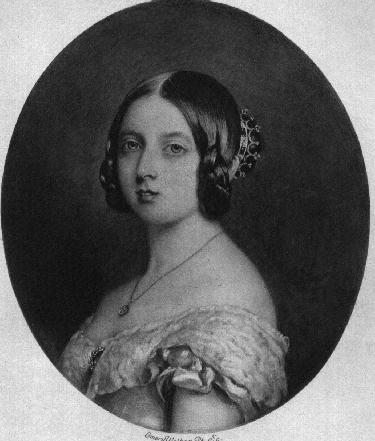
Monarch Profile: Queen Victoria of Great Britain

Posted on 22:15 by vikash gupta

In the history of the British and previously English monarchy there are several great names that stand out, just as in the royal annals of any country. However, there are some monarchs that stand out in the world at large. Names such as Peter the Great, Charles V, Louis XIV, Genghis Khan or Suleiman the Magnificent are known all over the world for standing out on the pages of history. The British Queen Victoria is another such figure. The length of her reign, the accomplishments of the United Kingdom during that time, the transitions that occurred, the victories that were won, the progress that was achieved all worked together to make Queen Victoria lend her name to an age and one of the most dynamic eras in British history at that. When she came to the throne, the British monarch wielded considerably more influence than would later be the case, yet this was still beyond the time when monarchs actually governed or provided the driving force behind national initiatives. Yet, her presence was formidable. Through her many offspring she became known as the “Grandmother of Europe” and that was a fact rather than an idle boast. The British Empire would not reach its peak in terms of sheer size until well after her reign, yet the Victorian era is still often seen as the zenith of the most glorious stage in British imperial history. Under Queen Victoria, the British Empire was still ahead of everyone else and Britain had a “presence” under Queen Victoria that it had never had before and, to some degree, would never quite have in the same way again.

Princess Alexandrina Victoria was born at Kensington Palace on May 24, 1819 to Prince Edward, Duke of Kent (fourth son of the prolific King George III) and Princess Victoria of Saxe-Coburg-Saalfeld, daughter of the Duke of Saxe-Coburg and sister to the future King Leopold I of the Belgians. Her parents wanted to name the baby girl Victoria but the Prince-Regent (soon to be King George IV) insisted that she be named after her godfather Tsar Alexander I of Russia. So, the new addition was given the first name ‘Alexandrina’ but was invariably known by her second name Victoria. Within a few months though, the Duke of Kent died leaving little Victoria to be brought up by her very strict mother who quickly fell under the domination of the Controller of her household Sir John Conroy, a brutish and scheming Irish officer who many suspected of planning to be the power-behind-the-throne in the event that the monarch, King William IV (who had succeeded his brother George IV) died before Victoria came of age. It was widely put about that King William IV was determined to live long enough to see his niece turn 18 so that her mother, and by extension Conroy, would not be able to get their hands on the government.

The old “Sailor-King” managed to do it, passing away less than a month after Victoria reached adulthood. With his death on June 20, 1837 Victoria became Queen and immediately sent Conroy packing (to the joy of most everyone but the duchess) and she made it clear to her rather domineering mother that she would no longer be dominated by anyone. That said, she was still a very young woman and had lived a very sheltered and protected life. Because of this, she came to rely probably too heavily on her German governess and the prime minister Lord Melbourne; a Whig politician very comfortable with the status quo. This was at a time when the industrial revolution was causing serious social problems in Britain which generated discontent. This became serious enough that an attempt on the life of the young Queen Victoria was made in 1840, the first of many, none of which, thankfully, were successful. However, Lord Melbourne was inclined to do nothing and the Queen always followed his advice.

Unfortunately, Lord Melbourne seemed perfectly willing to take advantage of the naïve young Queen and the result was a scandal in which his enemies became her enemies and brought into question the impartiality of the monarchy. Once adoring crowds began to jeer Queen Victoria and refer to her as “Mrs. Melbourne”. Fortunately, Queen Victoria had other advice as well, particularly from her uncle, the Belgian King Leopold I, who was also anxious to see his niece marry a Coburg to help ensure British support for Belgium. He encouraged Prince Albert of Saxe-Coburg-Gotha to call on the Queen and she was quickly in love with the handsome, young prince. It proved to be a perfect match, though perhaps slightly uneven. Prince Albert loved and respected Victoria but Victoria positively worshipped Albert. Fortunately, he was a good influence on the Queen and like her uncle Leopold tended to give beneficial advice, rescuing her from the partisanship of Lord Melbourne. The two were married in February of 1840, beginning a very happy marriage that produced nine children.

They had their differences as any couple does, but these were few and far between and they worked together closely in the business of remolding the British monarchy. After the rather libertine period of the regency, the monarchy under Queen Victoria would set an example for Christian morality, national service and solid traditional family values. The Queen met and encouraged anti-slavery campaigners and finally signed into law the total abolition of slavery in the British Empire. She also took an interest in the plight of orphans and the working class, supporting causes to improve their lives. When the Tories came to power she was persuaded by Prince Albert to give Peel a chance and became the first English sovereign since Henry VIII to meet a foreign monarch when she visited King Louis Philippe of the French in 1843, doing her part in the diplomatic campaign to reconcile France and Britain. Later she also exchanged visits with the Emperor Napoleon III and seemed rather flattered by the dapper Frenchman despite having the surname of Bonaparte. However, she did often clash with Lord Palmerston over his support for liberal or revolutionary forces on the continent, first in the Portuguese civil war and later in the revolutions of 1848.

In many ways, the Queen shared similar views and she had many harsh words for the more autocratic monarchies of Austria and Russia but she still believed in royal solidarity and supported a ‘united front’ against rebellion. She was not impressed, for example, with the outpouring of popular support amongst both commoners and aristocrats for the visiting Italian patriot Giuseppe Garibaldi on the grounds that he was a revolutionary, though she still credited him with being “Brave and honest”. Tensions with Palmerston reached their height prior to the outbreak of the Crimean War in 1854 which Prince Albert, as usual, tried to prevent. However, once started, the Queen was an enthusiastic supporter of the war effort, writing, “I feel so proud of my dear noble troops”. Her opinion of Palmerston improved because of the conflict but tensions renewed over the war between Denmark and the German states with Palmerston supportive of Denmark and Queen Victoria being sympathetic toward the Prussians. The greatest trial in the long life of Queen Victoria, however, came in 1861 when Prince Albert died of typhoid fever (not long after narrowly averting British intervention in the American Civil War). The Queen was devastated and went into the deepest mourning, wearing black for the rest of her life and staying mostly in seclusion for many years afterward, in spite of all efforts to persuade her to show herself to the public on occasion.

The Queen spent much of her time in the Scottish highlands where she came to rely a great deal on John Brown, one of her servants. Rumors and gossip spread that hurt the reputation of the Queen and it certainly did not help that many courtiers and even family members resented the friendship the Queen had with Brown. Treasonous radicals also seized the moment and began to call for a republic, demanding to know why the public was paying for what was essentially an absentee monarch. However, loyalty was more than skin-deep for most people back in those days and the republican movement flared up quickly and faded away just as quickly. It was not an easy time for the Queen and was not made better by the coming to power of the liberal William E. Gladstone. Of her many prime ministers, Gladstone was the one Victoria found it most difficult to endure. She disliked him personally but, more than that, she opposed almost every major action his government undertook such as extending the franchise, cutting back the authority of the House of Lords (though the Queen generally had a low opinion of the aristocracy), home rule for Ireland, imperial expansion and so on. She was much more pleased when Benjamin Disraeli became prime minister, a man she got along with exceedingly well. Known as a flatterer, it was Disraeli who, in 1876, had Parliament pass the Titles Bill which made Queen Victoria “Empress of India”.

Empress Victoria of India was very fond of the title and took a great interest in the subcontinent. Even in the wake of the mutiny of 1857 she had urged British officials to show restraint and compassion and she refused to tolerate any hint of racism toward the Indians on the part of any British officer or administrator who crossed her path. She had Indian servants at the palace and was extremely fond of them and the vociferous opposition of the Queen to any racism also helped reconcile her to the outbreak of the Boer War in South Africa. The origins of the conflict can be seen as rather unsavory but the Queen was able to get behind the effort after being told about how the Black Africans fared at the hands of the Boers. In foreign affairs, Queen Victoria always supported the success and achievement of the British Empire but she did not always agree with the actions of her government, especially that of Gladstone. With Disraeli, on the other hand, she applauded his support for the Ottoman Turks against Imperial Russia and she viewed the Congress of Berlin as a great achievement in blocking Russian expansion on the part of the western European powers. This caused some consternation given the behavior of Turkish officials toward many of the Balkan peoples, most of whom were Christian and eager for liberation at the hands of the Russian Empire.

The Queen endured Gladstone in power again and was particularly outraged at his handling of the rebellion in the Sudan and the subsequent heroic death of General “Chinese” Gordon -as were most British people everywhere. Despite the occasional grumbling, the long absence of the Queen seemed to make the hearts of her people grow fonder and when she celebrated her Diamond Jubilee the public outpouring of respect and devotion was immense to an unprecedented degree. Queen Victoria had reigned longer than any other British monarch, passing the record previously held by her grandfather King George III, and the Queen seemed to embody all the best qualities of the British people. She was dedicated to her country, principled, upright, honest and compassionate but never one to be taken advantage of; she was a tough lady too. Most Britons could not remember a time when Victoria had not been their Queen and she symbolized a British Empire that was the single most dominant power on earth. In her final years she remained as vigilant as ever in keeping track of politics and foreign policy. She was sufficiently pleased to see Kitchener deliver a drubbing to the Sudanese rebels who had struck down Gordon and she was a staunch supporter of the war in South Africa, never tolerating defeatist talk even during the days when the British cause seemed lost. Such discipline was not in vain and the Queen lived long enough to celebrate the relief of Mafeking and Ladysmith in the middle of 1900.

However, though the Queen must have seemed immortal to some, she was not to last much longer. She went to Ireland to acknowledge the service of Irish regiments in South Africa but was deeply saddened by the death of Prince Alfred, Duke of Saxe-Coburg-Gotha, her second son, in July. She became mildly ill but still kept up with her tradition of spending Christmas on the Isle of Wight. It became clear that she had not much time left and in the presence of her eldest son, the Prince of Wales, and eldest grandson, German Kaiser Wilhelm II, she passed away on January 22, 1901 at the age of 81 having reigned 63 years, 7 months and two days making her the longest reigning female sovereign in world history to date. Her funeral was held at Windsor Castle as all Europe and much of the world mourned her passing before she was laid to rest alongside her beloved husband.

Queen Victoria, the first Queen-Empress, had been from first to last a great monarch, despite the occasional misstep. Even when she seemed absent to the public at large, she never neglected her official duties and was always very cognizant of her responsibilities as a monarch. She also made it her duty to look after the welfare of all her subjects and was just as concerned about the peoples of India, South Africa or Ireland as she was about those of England or Scotland. Not everyone around her measured up to her very strict standards but she embodied values which most Britons appreciated and liked to consider British values. For Queen Victoria, who disliked overt displays of absolutism, a constitutional monarchy that was paternalistic, guiding the way of free and liberal people was the ideal system. She disliked democracy and thought the idea of women voting absurd, yet she strongly opposed oppression, cruelty or bigotry wherever she found it. An upright, moral people, as Queen Victoria always tried to encourage, would not need a harsh monarch or a democratic talking shop to have a prosperous society in which individuals ruled themselves properly. She was a Queen of great dedication and service, a Queen who stressed the importance of family and family ties (particularly for royalty) and she gave her name to an era the exuded British greatness. Truly, Queen Victoria was one of a kind.
Read More
Posted in Great Britain, monarch, Victoria | No comments

Saturday, 6 April 2013

MM Sunday Scripture

Posted on 23:01 by vikash gupta

That the princes of Israel, heads of the house of their fathers, who were the princes of the tribes, and were over them that were numbered, offered

-Numbers 7:2

Read More
Posted in scripture | No comments

Friday, 5 April 2013

Royal News Roundup

Posted on 22:07 by vikash gupta

Starting, for a change, in southern Europe, things have been going from bad to worse for the beleaguered Spanish Royal Family. On Wednesday, magistrate Jose Castro named Infanta Cristina, daughter of HM King Juan Carlos I, a suspect in the ongoing corruption and tax fraud case surrounding her husband Iñaki Urdangarin. Of course, the media was quick to run with the story, which itself would have been unthinkable a few years back when the media tended to treat the Royal Family with respect (rather like in America when JFK was in office). Not so anymore and Spanish republican traitors in parliament were also quick to start celebrating. The leader of the United Left coalition, Cayo Lara, was particularly elated. In the Spanish legal system a person can be named as a suspect and be investigated without having been charged with a crime, nor does it always mean they will be charged. From where yours truly sits, this is looking more and more like a smear campaign against the Royal Family, possibly even a coordinated effort to totally destroy the reputation of the monarchy with gossip, innuendo and accusations. Call me conspiratorial if you will but it seems a little too convenient that this all came crashing down at the height of the economic crisis and serves to distract public attention from the people who have actual power, pass actual laws and have actually driven Spain into the ground with their idiotic policies. God bless the King. He gave his people freedom and we see now how he is repaid.

In Rome, HH Pope Francis caused quite a bit of a stir on Holy Thursday in another break with tradition, going to a Roman juvenile prison and washing the feet of young women as well as young men, including one or two Muslims. Your humble blogger (not so humble as Pope Francis but I try) would also like to make it clear that when earlier I spoke of the Pope giving up the Apostolic Palace, *I was joking*. I was trying to be absurd and outrageous to make a point. However, it seems yours truly was actually being prophetic as Pope Francis has decided that he will not reside in the Apostolic Palace, declaring it too big and fancy for his simple tastes. He will instead have a small room in a building which normally houses staff and where the cardinals previously were quartered during the conclave. He will still use the library for receiving visitors and will use the usual balcony window to address the crowds. Perhaps the Apostolic Palace will be converted for administrative use, seems like a waste of space to just let it sit empty. Just to be on the safe side, I will refrain from making any further speculations about the future of the Holy See. Based on what I have said already, the Swiss Guards may want to start looking around for other employment opportunities just to be on the safe side.

On the British front, HRH the Duke of Cambridge said recently that there was no better job than saving lives, a reference to his work as a rescue-helicopter pilot, but with the impending arrival of his firstborn the future king will be cutting back on his duties with the Royal Air Force. Meanwhile, HRH the Countess of Wessex, royal patroness of the Girl Guides, said that she would be reviewing her role with the organization depending on the outcome of an upcoming vote on whether or not to drop their traditional loyalty oath to the Queen. The countess is reportedly quite upset by the matter and rightly so. If the Girl Guides decide to turn their back on the monarchy; why should any royal give them the time of day? I hope the Girl Guides will not do something so foolish (I could use a stronger word) but I say good on Countess Sophie for drawing a line at such an issue. Also, recently, HM the Queen received a special BAFTA award (the British equivalent of the Oscars in America) for her many years of support for the British film industry. That’s all well and good, though given the number of republican traitors in that particular business I was a little surprised by it. They also made mention of the Queen being the most unforgettable “Bond girl” in reference to that little stunt during the opening ceremony of the London Olympics. I could have done without that, as readers will remember, but as usual I seem to be in the minority on that front.

Not a great deal of big royal news in the Far East last week but there was plenty to talk about concerning the communist regime in North Korea which could have a very serious impact on the oldest monarchy in the world next door in Japan. The North Korean regime goes through these antics at fairly regular intervals, mostly because they are usually rewarded for it. They do something outrageous and demand food shipments or something, usually from America, as the price for stopping. This has been quite lucrative in the past, gaining considerable concessions by shutting down the same nuclear plant several times. The problem is that every time they seem to have to go one step farther to prove that “this time” they really mean it. One day they will finally go a step too far. In the past, U.S. President Obama said publicly that the days of North Korea being rewarded for bad behavior were over. If he really means that, the pudgy potentate in Pyongyang may find that he has painted himself into a corner and, when no concessions are forthcoming, is “forced” to take some aggressive action rather than being seen with egg foo young on his face. South Korea can take care of itself, it has a very professional army and the strongest economy among the free nations of the east but of course it would not be just North Korea but also Red China and that would be too much for South Korea to handle. The U.S. is obliged to be involved in this, but no one should count on the U.S. for long. Japan would be well-advised to enact constitutional reforms and move towards becoming a stronger, more independent country. Japan and South Korea may even have to go for their own nuclear deterrent or else be prepared to make sacrifices to please the bandit government in Peking. For the sake of all those involved, certainly for my own friends and family in Japan, South Korea and mainland China, I really hope all of this blows over without bloodshed as it has in the past.
Read More
Posted in news | No comments

Thursday, 4 April 2013

Kowtowing

Posted on 22:15 by vikash gupta

The “Great Sage” Confucius was of the opinion that mind and body were closely united and that our actions can influence our state of mind. Because of that, Confucian ceremonies often included physical acts meant to reinforce the proper state of mind and one of the most recognizable was kowtowing. It is a shame that today the term “kowtow” has been dumbed-down to be synonymous with groveling submission. In fact, it was a sign of the deepest respect and devotion towards a superior. The formal, Chinese kowtow consisted of three kneelings and nine prostrations and would be performed on solemn occasions such as at the enthronement of a new emperor. However, people also kowtowed before anyone exercising imperial authority on behalf of the Emperor, before family elders and in numerous instances in a religious context. Slightly different styles of the kowtow were once common across East Asia and even much further west. Even in the Bible, the Old Testament includes accounts of the Israelites ‘bowing’ their ‘head to the ground’ before the King who was, it is worth noting, referred to as the “son of God”.

Today, sadly in my view, kowtowing has almost completely been done away with. Something similar is still done in Thailand on certain occasions but, not surprisingly, in China the tradition mostly ended with the fall of the Qing Dynasty. Republican officials would still don traditional robes and kowtow to the former Emperor in a private capacity but it was the exception rather than the rule in Manchukuo where the standing bow became standard procedure. Today, for formal occasions in China (both on Taiwan and the mainland) the standing bow is most common. Kowtowing continued for much longer in Vietnam (French Indochina at the time) where there was still a monarchy but it came under criticism from certain western-minded scholars. In 1932, when Emperor Bao Dai returned to Vietnam from France, one of his first acts was to abolish kowtowing in almost all instances. It was a huge change in court ceremony but was, not surprisingly, welcomed by the newly established representative assembly who disliked such displays of loyalty to the monarch when they claimed legitimacy from popularity rather than divine investiture.

On this subject (as with many), I am in agreement with Confucius. Outward signs of respect encourage a more truly respectful attitude just as treating someone in a less respectful way will invariably lead to decline in how that person or the office they hold is viewed. This was not solely an eastern concept to be sure and it is why people in England used to drop to one knee in the presence of their sovereign or why Catholics used to kiss the toe of the Pope’s shoe. Today, in most monarchies, signs of respect have been reduced to a glorified nod of the head and even this, just like kowtowing, is denounced by some people as “humiliating”. Well, call me crazy (the verdict is in on that one) but I never thought a little humility was a bad thing. Being humble used to be a virtue and is certainly preferable over arrogance. After all, we may not kowtow to leaders anymore, but they have far more power over our lives than the monarchs of yesterday. Which do you think is more important to them?

Mandarins in Hue kowtowing in a ceremony in 1935 (a special occasion)

Enthronement scene from the film "The Last Emperor"

Prince Chun II kowtowing to his son and monarch in "The Last Emperor"

Vietnamese scholars kowtowing at the Temple of Literature in Hanoi in 1897

Vietnamese mandarins kowtowing before the Governor-General of Tonkin

*top picture is from the enthronement of the last Emperor of Vietnam

Read More
Posted in monarchy, obeisance | No comments

Wednesday, 3 April 2013

The Knights Templar

Posted on 22:18 by vikash gupta

When it comes to knighthood, probably none are so iconic as the Knights Templar. Officially the Poor Fellow-Soldiers of Christ and of the Temple of Solomon, the Knights Templar were formed around 1119 in the Holy Land after the First Crusade to protect Christian pilgrims. The founder and first Grand Master was Hugues de Payens who received approval from King Baldwin II of the Latin Kingdom of Jerusalem to organize a specifically religious order of knights. Because the king gave them a wing of the royal palace for their headquarters that was situated above the former Temple of Solomon (over which had been built the Al-Aqsa Mosque) they took the name of the Poor Knights of Christ and the Temple of Solomon or Knights Templar for short. Their colors were a red cross on a white field and their symbol was two knights on one horse, illustrative of their poverty by sharing one mount. They were from the start an elite force, one of the first permanent military corps dedicated to the defense of the Latin Kingdom of Jerusalem and Christian pilgrims. They took monastic vows but were soldiers rather than monks. Sworn to a life of poverty, chastity and obedience, they were governed by religious discipline but devoted themselves to a military calling rather than a life of prayer.

St Bernard of Clairvaux praised the knights, and those like them that came later, as a new breed of warrior dedicated to the protection of the weak and innocent and the defense of the Holy Land. A Cistercian abbot, St Bernard had been an inspiration to the knights himself and Hugues de Payens and his chief lieutenants such as Godfrey de Saint-Omer (a relative of de Payens) and Andre de Montbard adopted the religious discipline of the rule of St Benedict. In 1129 the Catholic Church officially endorsed the Knights Templar at the Council of Troyes and in 1139 HH Pope Innocent II issued a papal bull which granted special favors to the knights such as being able to pass through all borders, exempted them from taxation and placed them solely under the authority of the Roman Pontiff. It is to be expected that some would paint this grant in a negative light but all of these were necessary favors. The Knights Templar were made of soldiers from various countries in Christendom and had to have freedom of movement, if they had not been exempted from taxation they would have been forced to abandon their vow of poverty to at least some degree to raise the money to pay the taxes and as far as being under the authority of the Pope alone, one need look no farther than the later sacking of Constantinople to see what crusaders were capable of when they went their own way rather than following the orders of the Roman Pontiff.

These men, whom St Bernard referred to as “Christ’s militia” quickly gained a very noble reputation for their austerity, discipline, care for the defenseless and unmatched tenacity in battle. Their service was also very much in need. Even after the First Crusade had restored the Holy Land to Christian rule (following the Muslim conquest of the region from the East Roman Empire) the Kingdom of Jerusalem was under almost constant threat and pilgrims were frequently harassed and murdered by marauding bandits (who were not solely Muslims). A permanent religious military corps to defend these pilgrims and to defend the wild frontiers of Christendom was very necessary and soon came to be seen as the special elite guard of Christendom. Among the Knights Templar were several ranks. First were the ordinary knights, effectively heavy cavalry, wearing chain mail and armor, armed with swords and lances; then there were the sergeants who were armed and equipped as light cavalry and served as what we would today call the enlisted men as opposed to the knights who held the position similar to what would be commissioned officers today. They were to assist the knights, often in “mopping up” operations after the heavily armed knights made their charge which invariably smashed enemy armies. Then there were non-combatant members such as the ‘serving brothers’ who often did things such as taking care of the paper work of the order, looked after their properties and so on. These men were often under the direction of a retired knight or sergeant who was no longer fit for combat and, finally, there were the chaplains who attended to the spiritual needs of the knights.

This administrative aspect grew rapidly in importance as the prestige of the Knights Templar rose. Because the Holy Land was constantly under threat and pilgrims constantly needed protection, military operations were almost always ongoing and funds were needed to maintain them. So, as lands were donated to the knights and as bases were set up for recruitment and logistical support across Christendom, in time the knights had extensive properties that had to be looked after. Also, because of their reputation for honesty and nobility, their strength and their vow of poverty, wealthy individuals increasingly handed over their money to the knights to keep safe for them. In time, the Knights Templar became, inadvertently, one of the largest banking networks Europe had ever known. Part of this was also encouraged by the knights to protect pilgrims. It took money, then as now, to go on pilgrimage and a pilgrim carrying large numbers of sacks of very heavy coins was a very tempting target for bandits. Therefore, to prevent this, pilgrims could take their money to a Templar office in their home country, hand over a certain amount of money and be given a note to take with them which would then be redeemed for the same amount once the pilgrim reached the Holy Land.

First and foremost, of course, the Knights Templar were a small, elite military force. So small and so elite that at their height there were only four hundred in Jerusalem, though they, of course, also had auxiliary forces that fought with them. However, they were still subject to the divisiveness and infighting that was problematic for the Latin Kingdom of Jerusalem as it was at various times for every power, Christian and Muslim alike. They suffered a terrible blow at the disastrous battle at the Horns of Hattin at the hands of the Sultan Saladin, one of the most gifted and successful Muslim leaders of the period. In the aftermath, Jerusalem fell, which the Christians later retook but it fell again not long after and remained in Muslim hands until the First World War. The Knights Templar were forced to relocate to the city of Acre but, after a heroically fought siege, it was taken by the Muslims in 1291 at which time the knights relocated again to Syria. This too was, in due course, conquered by Islam and the Knights Templar were forced to leave the Holy Land for the island of Cyprus. However, the larger Islamic counter-offensive continued over the years but, it is important to note, the reputation of the Knights Templar always remained pristine.

Illustrative of the fact that the Knights Templar were very much an elite force was the fact that their most rigid rule was that they could never surrender unless the Templar banner went down and even then they were required to regroup and fight on with another of the military orders such as the Knights Hospitaller (later better known as the Knights of Malta). They could only leave the field of battle after all military banners had fallen. The Knights Templar were invariably the best equipped and most heavily armed of all the Christian knights. They were so effective that there was no group of Christian knights more feared amongst their enemies than the Knights Templar who were invariably massacred if any were ever taken alive. However, their prowess on the battlefield and great reputation for honesty and integrity helped, in a way, to bring about their ultimate downfall. It was because of these very excellent qualities that the Knights Templar became more and more trusted and so became more and more wealthy as the elites of Christendom entrusted their financial security to the knights. As tends to happen (and we can certainly see it now) this brought about a growing jealousy against the Knights Templar on the part of those who were less successful and had, perhaps, mismanaged their own finances.

The situation became worse when they fell to the mercy of local rulers after being forced out of the Holy Land after losing their last foothold after 1300 when they had tried to make a comeback in alliance with the Mongol Empire that was crushing Muslim forces from the east. Forced to relocate across Europe, the Knights Templar continued in isolated groups, becoming ever more prosperous and incurring more and more envy from people like King Philip IV of France (aka “Philip the Fair” or handsome) the same monarch who famously clashed with Pope Boniface VIII, after whom a Frenchman was elected to the See of Rome and the papacy removed to Avignon in France. It did not help that King Philip IV had borrowed a great deal of money from the Knights Templar during his war with England and was not looking forward to paying it back. Getting rid of the Knights Templar would, therefore, erase his considerable debt and enrich him immensely from the seizure of their properties. Sadly, this is exactly what he set out to do. However, to suppress so powerful and prestigious a group as the Knights Templar, it was first necessary to smear them and sully their reputation by inventing and spreading all sorts of lies about the knights. This is where the fantastic stories about bizarre sexual rituals and even satanic practices came from.

Most of it was simply made up out of thin air but others were exaggerations (gross exaggerations) of a small kernel of truth. An example of this was the accusation of idolatry which, far from being sinister, may have been an exaggerated perversion of the deep veneration the Knights Templar had for the holy Shroud of Turin, which they had recovered and carefully preserved. In any event, just as he had previously done to the Jews in another cash-grab, Philip IV ordered the mass arrests of the Knights Templar on Friday the thirteenth of October 1307. Under horrific torture many of these men confessed to every horrible crime their captors dreamed up, recanting all of it later. However, that made no difference as Philip was more than willing to spread the stories of the horrible “confessions” of the Knights Templar and to begin pressing the Pope to dissolve the order. He also had as many as possible burned alive, including the last Grand Master of the order, the elderly Jacques de Molay. The Pope did finally dissolve the Knights Templar, their reputation having been falsely and maliciously but irretrievably ruined, but it is important to note that he found them “not guilty” of heresy and the many crimes they had been unjustly accused of prior to doing so.

That is something that is almost never talked about but Pope Clement V, seen by many as a creature of the French monarch, totally exonerated the Knights Templar. Some certainly had done wrong, just as with the membership of any organization, and some made mistakes at time, however, on the whole, there should be no doubt about the Knights Templar being honest, upright and fantastically effective soldiers for Christendom. Their downfall came about solely because of jealously on the part of those who always envy the successful and seek to tear down those who have achieved something. It is also often forgotten that in other countries where the Knights Templar had been put on trial (again by envious little men) they were found completely innocent. Most wanted to continue their work and after the suppression joined other military orders of knighthood. Their downfall was one of the great betrayals of history, and their name has been sullied in all the years since with disreputable groups appropriating their names and symbols or by simply being the stars in every sort of bizarre fiction and conspiracy theories. However, none of that should sully the reputation of the Knights Templar who were the elite shock troops of Christendom, models of chivalry and who exemplified the spiritual and military virtues of the true Christian soldier.
Read More
Posted in christianity, Jerusalem, knighthood, templars | No comments

Monday, 1 April 2013

Favorite Royal Images: Romanov Heir

Posted on 22:24 by vikash gupta
HIH Tsarevich Alexei of Russia
martyred by communists in what was no less than an effort to murder the very future of Holy Russia

Read More
Posted in images, Romanov, Russia | No comments
Newer Posts Older Posts Home
Subscribe to: Posts (Atom)

Popular Posts

  • Royal News Special Report: Betrayal in Britain, On the Run in Ulster
    The history of British-Irish relations has often been unpleasant and controversial. Irish independence was a struggle, the establishment of ...
  • The Knights Templar
    When it comes to knighthood, probably none are so iconic as the Knights Templar. Officially the Poor Fellow-Soldiers of Christ and of the Te...
  • Today in French Royal History
    On this day in 1804 Napoleon Bonaparte was declared "Emperor of the French" by the French Senate. Later, Pope Pius VII would presi...
  • Consort Profile: Empress Kojun of Japan
    There are certain monarchs that have always impressed me as being ‘a monarchists’ monarch’. Putting aside their positive or negative abiliti...
  • The Tragedy of the Second Spanish Republic
    As constant civil wars and political infighting over a disputed succession had crippled the Kingdom of Spain, in 1870 the Spanish government...
  • Monarch Profile: King Luis I of Portugal
    HRH Prince Luis Filipe Maria Fernando Pedro de Alcantara Antonio Miguel Rafael Gabriel Gonzaga Xavier Francisco de Assis Joao Augusto Julio ...
  • The Teutonic Knights
    When one thinks of the old-fashioned image of a knight, one probably first thinks of the Knights Templar or other Crusaders fighting in the ...
  • The Abdication of King Juan Carlos
    It came as quite a surprise yesterday morning to wake up to news that His Majesty King Juan Carlos I of Spain had announced his intention to...
  • The Bonaparte Crusader
    Few people, even, or perhaps especially, monarchists would think of a Bonaparte as a religious crusader. Napoleon Bonaparte supported the vi...
  • Monarch (sort of) Profile: Nguyen Duc Duc
    This profile was a rather difficult one to decide to do for the simple reason that the monarch known as Duc Duc was hardly a monarch at all....

Categories

  • 2013
  • 2014
  • abdication
  • abortion
  • ad
  • afghanistan
  • Africa
  • aga khan
  • Akihito
  • america
  • anniversary
  • argentina
  • armenia
  • Australia
  • Austria
  • Austria-Hungary
  • Baden
  • Bavaria
  • Belgium
  • Bhutan
  • birth
  • Birthday
  • blog
  • blog policy
  • bonaparte
  • bosnia
  • Bourbon
  • Brazil
  • British Empire
  • brunei
  • bulgaria
  • bullfighting
  • burma
  • cambridge
  • Canada
  • cardinal
  • caribbean
  • Carlism
  • Carlists
  • castile
  • Catholic
  • Catholic Church
  • Charles I
  • children
  • China
  • Christ the King
  • christianity
  • christmas
  • clash
  • colony
  • communism
  • Congo
  • consort
  • coronation
  • croatia
  • crusades
  • czech
  • czechoslovakia
  • death
  • democracy
  • Denmark
  • dominican republic
  • Easter
  • Economic crisis
  • egypt
  • Elizabeth II
  • Emperor
  • emperor of austria
  • emperor of vietnam
  • empire series
  • England
  • eternal rest
  • Ethiopia
  • fascism
  • fashion
  • favorites
  • film
  • Finland
  • flag
  • France
  • French Revolution
  • gay marriage
  • Germany
  • golden horde
  • government
  • Grace Kelly
  • Great Britain
  • Greece
  • Grimaldi
  • guadeloupe
  • guest
  • halloween
  • Hanover
  • Hapsburg
  • Harald V
  • Hesse
  • History
  • hohenzollern
  • holiday
  • Holland
  • Holy Roman Empire
  • Hungary
  • images
  • immigration
  • incoherent ramble
  • independence
  • India
  • indonesia
  • Iran
  • Ireland
  • Islam
  • italy
  • jacobite
  • jamaica
  • Japan
  • Jerusalem
  • Jordan
  • Juan Carlos
  • judaism
  • July 4
  • kent
  • knighthood
  • Korea
  • libertarianism
  • Liechtenstein
  • luxembourg
  • mad rant
  • madagascar
  • mail
  • malaysia
  • malta
  • Manchu
  • manchukuo
  • Margrethe II
  • marriage
  • Maximilian
  • Mexico
  • Middle East
  • military
  • ming dynasty
  • mini
  • Monaco
  • monarch
  • monarchism
  • Monarchist
  • monarchists
  • monarchy
  • money
  • Mongolia
  • mongols
  • montenegro
  • movie review
  • mussolini
  • mythology
  • Nam Phuong
  • Napoleon
  • Napoleon III
  • nazi
  • netherlands
  • New Sweden
  • new year
  • news
  • Nguyen
  • Nguyen Dynasty
  • nigeria
  • normans
  • north carolina
  • Norway
  • Obama
  • obeisance
  • opinion
  • Orange
  • Orleans
  • Ottoman Empire
  • Our Lady of Guadalupe
  • Pahlavi
  • pan-monarchism
  • Papal Profile
  • Persia
  • personal
  • piedmont-sardinia
  • plantaganet
  • politics
  • Pope
  • portraits
  • Portugal
  • president
  • pretender
  • prince william
  • prophecy
  • Prussia
  • Q&A
  • qatar
  • Qing
  • Qing Dynasty
  • qing emperors
  • questions
  • quote
  • radical islam
  • Rama IX
  • refuting republicanism
  • regalia
  • regent
  • religion
  • remedios
  • republicanism
  • Revolutionary War
  • Risorgimento
  • Romania
  • Romanov
  • Rome
  • royal
  • royal saint
  • Russia
  • sacred heart
  • saudi arabia
  • savoy
  • saxe-coburg-gotha
  • saxony
  • scandinavia
  • Scotland
  • scripture
  • selangor
  • serbia
  • Siam
  • Sicily
  • slovakia
  • slovenia
  • socialism
  • South Africa
  • Spain
  • st patrick
  • story
  • stuart
  • succession
  • sudan
  • swaziland
  • Sweden
  • switzerland
  • syria
  • taxes tea party USA
  • ted kennedy
  • templars
  • texas
  • texas friends
  • Thailand
  • the Netherlands
  • thirty years war
  • thurn und taxis
  • Tibet
  • trebizond
  • Tudor
  • Turkey
  • Two Sicilies
  • UAE
  • ukraine
  • Ungern-Sternberg
  • US President
  • USA
  • Vatican
  • viceroy
  • Victoria
  • video
  • Vietnam
  • vision
  • Wales
  • wettin
  • white russians
  • Willem-Alexander
  • windsor
  • Word War I
  • World War I
  • World War II
  • yugoslavia

Blog Archive

  • ▼  2015 (6)
    • ▼  January (6)
      • King Abdullah of Saudi Arabia 1924-2015
      • Papal Profile: Pope Paul II
      • Britain and the War It Couldn't Win
      • Roots of the Terrorist Victory in Paris
      • After the World Came Apart
      • Clash of Monarchies: The Russo-Japanese War
  • ►  2014 (211)
    • ►  December (4)
    • ►  November (11)
    • ►  October (15)
    • ►  September (12)
    • ►  July (24)
    • ►  June (29)
    • ►  May (24)
    • ►  April (26)
    • ►  March (22)
    • ►  February (21)
    • ►  January (23)
  • ►  2013 (283)
    • ►  December (21)
    • ►  November (24)
    • ►  October (23)
    • ►  September (25)
    • ►  August (32)
    • ►  July (34)
    • ►  June (30)
    • ►  May (28)
    • ►  April (31)
    • ►  March (25)
    • ►  February (10)
Powered by Blogger.

About Me

vikash gupta
View my complete profile